


Vigor C510 Series Overview
The DrayTek Vigor C510 Series is a 5G/4G LTE business VPN router designed for reliable and secure network connectivity.
The Vigor C510 Series supports dual SIM failover, advanced VPN features, and enterprise-grade security, making it suitable for modern business networks.
Key Features of the Vigor C510 Series
The Vigor C510 Series includes dual SIM 5G/4G LTE connectivity for network redundancy.
In addition, the router offers advanced VPN capabilities, firewall protection, and centralized management for business environments.
As a result, businesses can maintain stable connections even during WAN outages.
Vigor C510 Series for Business Networks
The DrayTek Vigor C510 Series is ideal for small to medium enterprises that require secure VPN access and reliable 5G connectivity.
Therefore, it is commonly deployed in branch offices, remote work environments, and failover scenarios.
Why Choose the Vigor C510 Series
Compared to standard LTE routers, the Vigor C510 Series provides enhanced security, flexible WAN options, and centralized management features.
The Vigor C510 Series is a 5G business VPN router designed for secure and reliable connectivity.
**Typical 5G Downlink/Uplink speeds are 400Mbps/200Mbps, depending on the local conditions.
The Vigor C510 series combines 4G LTE and 5G to provide excellent mobile coverage in Australia and New Zealand:
5G/LTE/WCDMA Specifications
5G NR Sub-6 SA Band: n1, 3, 7, 8, 20, 28, 38, 40, 77, 78
5G NR Sub-6 NSA Band: n1, 3, 7, 8, 20, 28, 38, 40, 77, 78
5G Max. Data Rate NR SA: 2.4Gbps (DL) / 900Mbps (UL)**
5G Max. Data Rate NR NSA: 3.4Gbps (DL) / 550Mbps (UL)**
LTE FDD Band: B1, 3, 5, 7, 8, 20, 28
LTE TDD Band: B38, 40
LTE Category: Cat19 (DL) / Cat18 (UL)
WCDMA (3G) Band: B1, 8
WCDMA Max. Data Rate: 42Mbps (DL) / 5.76Mbps (UL)

**Typical 5G Downlink/Uplink speeds are 400Mbps/200Mbps, depending on the local conditions.
High-Performance 5G & Wi-Fi 6 Dual-WAN VPN Solutions with Enterprise Security

The DrayTek Vigor C510 Series is a powerful line of dual-WAN cellular routers engineered for high-speed 5G and 4G LTE network applications. Ideal for both businesses and remote professionals, the VigorC510 delivers ultra-fast performance, robust security, and seamless connectivity in any environment.
With Gigabit Ethernet, dual nano SIM slots, and WiFi 6 (AX3000) support, the Vigor C510 series ensures uninterrupted internet access with multi-WAN failover. Its advanced VPN capabilities allow secure remote access with IPSec, OpenVPN, and WireGuard. Featuring up to 3.4Gbps 5G download speeds, this router is built for high-performance applications, including VoIP, cloud services, and remote office deployments.
Designed with an enterprise-grade firewall and content filtering, the Vigor C510 series provides comprehensive security against cyber threats. Flexible management options include web-based UI, SSH, and SNMP, making network administration effortless.
For businesses requiring fast, reliable, and secure connectivity, the DrayTek Vigor C510 Series is the ideal networking solution.
Interface

Key Features

Embedded SIM Slot
Provide 4G LTE/5G Internet access to where fixed lines are not available, without the need for a USB dongle.

Firewall & Content Filter
Filter webpages by URL keywords or web categories to block access to insecure or inappropriate content.

VPN (Virtual Private Network)
Build a secure and private tunnel from the LAN of Vigor C510 series to the remote offices and teleworkers over the Internet. Learn more

URL/IP Reputation
Improve network security by classifying URLs and IPs to control web access and protect against online threats. Learn more

EasyVPN

Hotspot Web Portal
Market your business and communicate with guests while offering hospitality WLAN. Learn more

IAM
A solution that manages digital identities, authentication, and access control to ensure the right users or groups have appropriate access to critical resources.

Virtual AP/Switch controller
All-in-one management platform for Vigor C510 Series to maintain and monitor the VigorAPs and VigorSwitches.

Bandwidth Management
Prevent one device using all the bandwidth by bandwidth limit policy, session limit policy, and QoS settings.

Mesh (ax model only)
Easily link to other VigorAP to expand the wireless network. Learn more

DrayDDNS
A free DDNS service to allow access to your router using a fixed hostname of your choice. Learn more
[DISPLAY OFF] —– MOBILE VIEW
Embedded SIM Slot
Provide 4G LTE/5G Internet access to where fixed lines are not available, without the need for a USB dongle.
Firewall & Content Filter
Filter webpages by URL keywords or web categories to block access to insecure or inappropriate content.
VPN (Virtual Private Network)
Build a secure and private tunnel from the LAN of Vigor C510 series to the remote offices and teleworkers over the Internet. Learn more
URL/IP Reputation
Improve network security by classifying URLs and IPs to control web access and protect against online threats. Learn more
EasyVPN
Hotspot Web Portal
Market your business and communicate with guests while offering hospitality WLAN. Learn more
IAM
A solution that manages digital identities, authentication, and access control to ensure the right users or groups have appropriate access to critical resources.
Virtual AP/Switch controller
All-in-one management platform for Vigor C510 Series to maintain and monitor the VigorAPs and VigorSwitches.
Bandwidth Management
Prevent one device using all the bandwidth by bandwidth limit policy, session limit policy, and QoS settings.
Mesh (ax model only)
Easily link to other VigorAP to expand the wireless network. Learn more
DrayDDNS
A free DDNS service to allow access to your router using a fixed hostname of your choice. Learn more
5G Router with High Speed Mobile Connectivity
- The integrated 5G/LTE modem with Category 19 supports carrier aggregation, providing high-speed mobile broadband connectivity for Internet access and VPN.
- The dual SIM slot accepts two SIM cards from different mobile network providers. This ensures that the router can seamlessly switch to the secondary SIM and cellular network if the primary mobile connectivity is broken.
- Equipped with four cellular antennas (2 internal + 2 external), the router allows users to optimise placement for the strongest possible signal coverage.

* Backwards compatible to 4G LTE
Effortless and Secure VPN Access with EasyVPN
Setting up a VPN can often be complex, involving protocol selection, manual configurations, and troubleshooting, especially for non-technical users. While Vigor routers support advanced VPN protocols such as IPsec, WireGuard, and OpenVPN, traditional setup methods can be time-consuming and daunting.
EasyVPN simplifies this process by offering a streamlined, hassle-free solution for secure remote connectivity. With EasyVPN, users can quickly establish encrypted connections without the need to:
- Manually generate WireGuard keys
- Import OpenVPN configuration files
- Upload certificates
By automating these steps, EasyVPN delivers a fast, secure, and intuitive VPN experience—perfect for businesses and users who want robust protection without the technical complexity.

Stealth Security Protection with Port Knocking
DrayTek’s Port Knocking technology adds an advanced stealth security layer by keeping critical network services completely invisible to unauthorised users. Instead of exposing management ports or VPN services to the public internet, Port Knocking requires a predefined “knock” sequence before access is granted, ensuring that only trusted users can discover and use these services.
By integrating three powerful functions, Port Knocking provides robust protection against port scanning, brute-force attacks, and unauthorised access.
Port Redirection
- Conceal real service ports from the public internet
- Redirect unauthorised requests to non-existent services to prevent detection

Secure Router Management Access
- Allow router management access only after a successful knock sequence or through a secure internal server
- Completely eliminate direct exposure of the management interface to the open internet
VPN Service Control (WAN Binding)
- Keep VPN services invisible until the correct knock sequence is received
- Bind VPN availability to specific WAN interfaces and authorised IP addresses
How It Works
- By default, all protected ports remain closed and undetectable
- After the correct knock sequence is received, selected ports open temporarily for authorised access
- Once the configured time window expires, services automatically return to hidden mode
With DrayTek Port Knocking, your network operates in stealth mode, invisible to attackers yet instantly accessible to authorised administrators and remote users. It is the ideal solution for organisations that demand high-level security without compromising accessibility.
IAM (Identity and Access Management)
Vigor C510 Series with the new DrayOS5 is Zero Trust ready!
IAM (Identity and Access Management) is a cybersecurity system that controls user access by managing digital identities, authentication, and authorisation, to ensure correct access to network resources such as applications and devices.
With processes including identifying, authenticating, authorising users or groups, and assigning appropriate levels of access, IAM enhances both security management and the user experience and plays an important role in cloud-based services.

The IAM solution from VigorC510 is Zero Trust Ready, and allows you to grant and categorise user privileges, create and manage access policies, and define large-scale group policies that integrate multiple filtering rules and traffic-shaping settings.
Users & Groups
- User accounts and user groups allow flexible access level control.
- Existing external authentication server is supported.
- User and MFA protection can be easily configured.

Access Policies
System administrators can create access policies for the local users in this tab. The access policies can be configured based on:
- MAC address filter list
- The allowed / blocked user list
- The login sessions lifetime
Access policies can be combined to create a robust security framework for your system.

Group Policies
Group policies can be configured for predefined local resources such as employees, workstations, network printers, and local servers. Network Firewall and traffic shaping policies can be configured to enhance network security and optimise traffic flows.
Conditional Access Policy
Conditional access policies can be configured to request users to provide multiple forms of authentication before granting appropriate access to a resource.
- Specify a period for the user to re-authenticate
- Restrict access to specific source IP addresses or ranges of IP addresses
- Specify VLAN-based access level in your conditional policies
- Set up time schedules when users are allowed to log-in

Resources Tab
Configure local resources such as IP and Mac addresses for workstations, network printers, PBX systems, NVR systems, servers, etc.
Hotspot Web Portal
DrayTek’s Hotspot Web Portal offers a fully customizable Wi-Fi login experience with multiple authentication methods, including username/password, social media login, and voucher-based access. It also supports quotation management, Wi-Fi marketing tools for promotions, and custom branding options to enhance user engagement and brand visibility.
Network administrators can easily manage user access, set bandwidth limits, and monitor real-time usage, making it an ideal solution for guest Wi-Fi in cafés, hotels, retail stores, and event venues.

Account Status
The Account Status feature includes brute force protection, which automatically logs key details such as the attacking IP address, targeted username or profile, and the service under attack. It also tracks the protection duration, recording the start and end times of the block, along with the total number of attempted hits.
For flexibility, administrators can manually unblock access in cases where a legitimate user was mistakenly restricted.

Backup and Restore
Easily back up or restore router settings, including Users and Groups, Access Policies, Group Policies, and more. For added security, password protection can be applied during the backup and restore process to prevent unauthorised access.

URL Reputation
URL Reputation is a cloud-based threat intelligence service that adds an extra layer of security to protect LAN clients during their online activities.
With a total of 82 content categories, including 10 security-focused ones, it provides comprehensive and up-to-date protection for both home and business networks.
These categories cover a wide range of areas—from malware, spyware, and adware, to parental controls, business productivity, and social networking—helping to create a safer online environment, enhance employee productivity, and support efficient bandwidth management.

IP Reputation
Every internet communication involves source and destination IP addresses. Cybercriminals often exploit known malicious IPs to launch attacks using various techniques, including:
- Botnets
- TOR nodes and anonymous proxies
- Command-and-Control (C2) servers
- Phishing servers
- Distributed Denial of Service (DDoS) attacks

IP Reputation helps identify and block traffic from these high-risk IP addresses, adding an essential layer of network protection against cyber threats.
Blocking communication with malicious IP addresses is critical for network security. However, relying on static blocklists is no longer effective, as they lack the real-time, predictive intelligence needed to combat evolving threats. The IP Reputation Service addresses this challenge by delivering dynamic, real-time scoring and classification of IP addresses. It enables the automatic blocking of:
- High-risk traffic
- Suspicious proxies
- Malware distributors
- IPs associated with recent malicious activity
The system evaluates IPs based on multiple factors, including infection history, protocol behaviour, and attack frequency. Each IP is assigned a reputation score, which determines whether it should be trusted, monitored, or blocked, ensuring proactive and intelligent network protection.
Vigor C510ax 5G Cellular Router with AX3000 (WiFi 6) Capacity

The Vigor C510ax is a high-performance 2×2 dual-band WiFi 6 and 5G cellular router, delivering blazing-fast wireless connectivity with 160MHz channel bandwidth and 1024-QAM modulation for significantly increased throughput. With theoretical speeds of up to 3000Mbps—574Mbps on the 2.4GHz band and 2402Mbps on the 5GHz band, it offers up to 2.5 times the speed of a standard 802.11ac 2×2 dual-band router.
Packed with business-grade features such as URL Reputation filtering, Route Policy, Application-based QoS, and more, the Vigor C510ax is an ideal solution for professional smart homes, SOHO users, and anyone who demands complete control and visibility over their network.
OFDMA (Orthogonal Frequency Division Multiple Access)
With OFDMA modulation scheme, each channel is made up of 256 subcarriers spaced 78.125 kHz apart, compared to 64 subcarriers spaced 312.5 kHz apart with OFDM. With up to 4 times data efficiency and more advanced channel sharing technologies, a device can be allotted bandwidth based on the assessed needs for the highest airtime efficiency possible. For example, users on streaming or VoIP services can be allocated more bandwidth and time, while services such as email or website browsing can be assigned less bandwidth that is still sufficient for the tasks, thus improving user experience in high-density environments.
OFDM

OFDMA

MU-MIMO functions by transmitting data to multiple users simultaneously, much like several delivery trucks operating in parallel. This improves overall network capacity and boosts individual user speeds.

BSS Colouring Instead of CSMA/CA which allows only one device to transmit at a time, 802.11ax uses BSS Colouring to manage collision avoidance. Each Wi-Fi device is assigned a Basic Service Set (BSS), a 6-bit colour field, while adjacent devices are allocated with different colours. Before transmitting, the device checks the BSS and backs off only when the BSS is of the same colour as its own. In this way, the spectral efficiency is maximized as APs and Wi-Fi clients can transmit simultaneously even if they are on the same channel.

TWT (Target wake time)
Devices negotiate with the AP for a Target Wake Time (TWT), or joint a TWT broadcast session, and transmit data only when the TWT arrives, thereby reducing power consumption and increase network efficiency.

WPA3 (Wi-Fi Protected Access 3) enhances the security of Wi-Fi networks by addressing vulnerabilities in previous standards (WEP, WPA and WPS2) and introduces new features including stronger authentication, better encryption, and improved protection against attacks such as brute-force password guessing and man-in-the-middle exploits.
DrayTek’s WiFi 6 encryption:
- WEP (64 / 128-bit)
- WPA / WPA2 / WPA3 / OWE
The comparison table below compares security design of Wi-Fi security protocols WEP, WPA, WPA2 and WPA3.
| WEP | WPA | WPA2 | WPA3 | |
|---|---|---|---|---|
| Encryption | RC4 | TKIP / RC4 | AES-CCMP | AES-CCMP / AES-GCMP |
| Session Key | 64/128 bit | 128 bit | 128 bit | 128/256 bit |
| Authentication | Open system, shared key | Pre-shared key | Pre-shared key | AES-CCMP / AES-GCMP |
| Level of Security | Very low | low | Moderate | High |
[DISPLAY OFF] —– MOBILE VIEW
| WEP | WPA | WPA2 | WPA3 | |
|---|---|---|---|---|
| Encryption | RC4 | TKIP / RC4 | AES- CCMP | AES- CCMP / AES- GCMP |
| Session Key | 64/128 bit | 128 bit | 128 bit | 128/256 bit |
| Authentication | Open system, shared key | Pre- shared key | Pre- shared key | AES- CCMP / AES- GCMP |
| Level of Security | Very low | low | Moderate | High |
| Encryption | WEP: RC4 WPA: TKIP / RC4 WPA2: AES-CCMP WPA3: AES-CCMP / AES-GCMP |
| Session Key | WEP: 64/128 bit WPA: 128 bit WPA2: 128 bit WPA3: 128/256 bit |
| Authentication | WEP: Open system, shared key WPA: Pre-shared key WPA2: Pre-shared key WPA3: AES-CCMP / AES-GCMP |
| Level of Security | WEP: Very low WPA: low WPA2: Moderate WPA3: High |
AP-Assisted Roaming – built-in in selected Wi-Fi Vigor Routers and all Vigor Access Points

Extend Transmission Range
When a Wi-Fi client moves out of its effective transmission range which is defined by the Basic Rate and/or Received Signal Strength threshold, the AP forces the Wi-Fi client to pick up a nearby access point with stronger signals thereby extending the range.
Improve Data Rates
When the “Minimum RSSI with Adjacent AP” option is set, APs or routers on the same local subnet will exchange client information with each other and switch to the AP or router that has the strongest signal, ensuring that data rates can be as good as possible.
Better User Experience
Instead of ineffective transmission with low basic rates or RSSI, the better links provide better user experience while saving the airtime.
No Controller Required
Assisted Roaming is a built-in feature in all Vigor Access Points and a number of Wi-Fi routers; it saves the need for an ad-hoc wireless controller and is an ideal solution for simple network deployments.
Mesh Wi-Fi (Vigor C510ax only)
Vigor C510ax supports up to 7 APs, which can form one or more Wireless Groups. Each group can form Mesh links automatically based on the optimum signal level among the APs and devices.


Management Solution
On-Device Network Management with DrayTek Virtual Controller
The DrayTek Virtual Controller is a built-in management platform available on supported routers and firewalls.
It delivers centralised network control without cloud dependency, helping reduce data exposure risks while
enhancing security and privacy.
Wireless Management
- Mesh Controller – Easily build and manage wireless mesh networks with auto-routing and self-healing capabilities.
- AP Management (APM) – Automatically discover, configure, and monitor connected VigorAPs, making it simple to deploy multiple APs with unified settings.
Switch Management
- Central Switch Manager (SWM) – Detect and manage supported VigorSwitches, push configurations, monitor device status, and apply VLAN or QoS policies, all from a single local interface.
Unified Mesh & AP Management
The Virtual Controller offers two modes, providing flexibility for different deployment needs.

Mash Mode
Automatically creates a self-healing wireless mesh with the Vigor2136 Series as the Root AP and up to 7 Node APs, delivering simple, scalable, and reliable Wi-Fi coverage.
AP Management Mode
For networks with more than 8 APs, the Virtual Controller automatically switches to AP Management Mode, allowing centralised management of up to 20 APs directly through the router’s interface.
Seamless Mesh Role Assignment
When powered on, devices automatically discover each other and assign roles as Root or Node Aps, no manual setup required. This streamlined process enables rapid mesh network formation with optimised coverage and self-healing reliability.

SWM (Switch Management)
The Vigor2136 Series can operate as a master controller to centrally manage and monitor up to 5 switches. It also provides visibility into connected PD devices behind the switches, such as IP cameras and access points.

Device Management
Easily monitor switch status, firmware versions, and uptime across all managed devices from a single interface.

Port Profile
Create and apply multiple port profiles to configure PoE, VLAN, QoS, and other settings across selected switches with ease.

Maintenance
Easily perform configuration backup and restore, remote reboots, or full factory resets.
Unified Mesh & AP Management
The Virtual Controller offers two modes, providing flexibility for different deployment needs.
Mash Mode
Automatically creates a self-healing wireless mesh with the Vigor2136 Series as the Root AP and up to 7 Node APs, delivering simple, scalable, and reliable Wi-Fi coverage.
AP Management Mode
For networks with more than 8 APs, the Virtual Controller automatically switches to AP Management Mode, allowing centralised management of up to 20 APs directly through the router’s interface.
Seamless Mesh Role Assignment
When powered on, devices automatically discover each other and assign roles as Root or Node Aps, no manual setup required. This streamlined process enables rapid mesh network formation with optimised coverage and self-healing reliability.
SWM (Switch Management)
The Vigor2136 Series can operate as a master controller to centrally manage and monitor up to 5 switches. It also provides visibility into connected PD devices behind the switches, such as IP cameras and access points.
Device Management
Easily monitor switch status, firmware versions, and uptime across all managed devices from a single interface.
Port Profile
Create and apply multiple port profiles to configure PoE, VLAN, QoS, and other settings across selected switches with ease.
Maintenance
Easily perform configuration backup and restore, remote reboots, or full factory resets.
Wireless Management Solution

Mesh (ax model)
Up to 7 APs
- DrayTek Wireless app-support
- Discovery
- Auto-Provisioning
- Monitoring
- Centralized Hierarchy View

Virtual AP Controller
Up to 20 VigorAPs
- Auto-Discovery
- Auto-Provisioning
- Monitoring
- Centralized View
- Alarm
- Reboot VigorAP Remotely
- Wi-Fi Client Load Balancing

Device Management
View and Configure VigorAPs
- Device List
- Mesh Status
- Optimize All Mesh Links
- AP Adoption
- AP Discovery
Switch Management Solution
SWM
Virtual Switch Controller
Up to 5 VigorSwitches
Device Management
Display VigorSwitch name, MAC address, IP address, Firmware Version, Model, Online Status, System Uptime, Port in Use, Clients, and Last Process Status.
Scan the network to add new VigorSwitches.
Port Profile
Create profiles that include general settings, VLAN, GVRP, Multicast STP, and QoS settings, which can be applied to the managed switch.
Maintenance
Perform maintenance tasks for selected VigorSwitch.
Tasks include Configuration backup and restore, Remote Reboot and Factory Reset of the selected switch.
Software Management

VigorACS 3
- Zero Touch Deployment & Provisioning
- Auto VPN
- Interface Quality & SLA
- VoIP Optimisation & Monitoring
- Application Visibility
- Application Based SD-WAN Policy
- Customized Hotspot Page with Multilingual
- Hotspot Clients Analytics
- ACS Server Load Balancing / Failover
In-the-Box
Vigor C510 Series

2 x Cellular Antennas

2 x Wi-Fi Antennas
(ax model)

RJ-45 Cable
(Ethernet)

Power Adaptor

Quick Start Guide
Models
| Model | Vigor C510 | Vigor C510ax |
|---|---|---|
| Product |  | 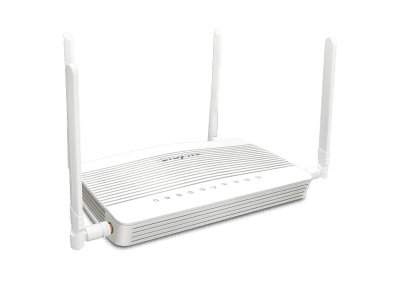 |
| Gigabit WAN | 1 | 1 |
| Selectable Gigabit WAN/LAN | 1 | 1 |
| 5G/4G LTE | 2 x nano SIM slots (SIM slot 2 for Failover) | 2 x nano SIM slots (SIM slot 2 for Failover) |
| Wireless WAN | 2 | |
| Gigabit LAN | 3 | 3 |
| VPN Tunnels | 16 | 16 |
| Wireless LAN | WiFi 6, AX3000 | |
| Wi-Fi Antenna | 2.8 dBi for 5GHz 2.1 dBi for 2.4GHz | |
| VoIP (2xFXS) |
Specifications
Interface (gDisplayOff)
| Interface | |
|---|---|
| Fixed WAN Port | 1 x Gigabit Ethernet |
| LAN/WAN Switchable Port | 1 x Gigabit Ethernet |
| Fixed LAN Port | 3 x Gigabit Ethernet |
| SIM Slot | 2 x nano SIM slots (SIM slot 2 for Failover) |
| 4G/5G Antenna | 2 x External Dipole 2 x Internal PIFA Peak Gain: 4 dBi |
| Wi-Fi Antenna (ax model) | 2 x External Dipole 1 x Internal PIFA 2.8 dBi gain for 5GHz 2.1 dBi gain for 2.4GHz |
| 2.4G WLAN (ax model) | 802.11ax 2×2 MIMO 574Mbps max link rate |
| 5G WLAN (ax model) | 802.11ax 3×3 MU-MIMO 2402Mbps max link rate |
[DISPLAY OFF] —– MOBILE VIEW
| Interface | |
|---|---|
| Fixed WAN Port: 1 x Gigabit Ethernet | |
| LAN/WAN Switchable Port: 1 x Gigabit Ethernet | |
| Fixed LAN Port: 3 x Gigabit Ethernet | |
| SIM Slot: 2 x nano SIM slots (SIM slot 2 for Failover) | |
| 4G/5G Antenna: 2 x External Dipole 2 x Internal PIFA Peak Gain: 4 dBi | |
| Wi-Fi Antenna (ax model): 2 x External Dipole 1 x Internal PIFA 2.8 dBi gain for 5GHz 2.1 dBi gain for 2.4GHz | |
| 2.4G WLAN (ax model): 802.11ax 2×2 MIMO 574Mbps max link rate | |
| 5G WLAN (ax model): 802.11ax 3×3 MU-MIMO 2402Mbps max link rate |
Performance (gDisplayOff)
| Performance | |
|---|---|
| NAT Session | 50K |
| NAT Throughput | 940 Mbps |
[DISPLAY OFF] —– MOBILE VIEW
| Performance |
|---|
| NAT Session: 50K |
| NAT Throughput: 940 Mbps |
5G (gDisplayOff)
| 5G | |
|---|---|
| 5G Band | n1, n20, n28, n3, n38, n40, n7, n77, n78, n8 |
| 5G Antenna Peak Gain | 4 dBi |
| 5G NSA Max. Rx Link Rate** | 3400 Mbps |
| 5G NSA Max. Tx Link Rate** | 550 Mbps |
| 5G SA Max. Rx Link Rate** | 2400 Mbps |
| 5G SA Max. Tx Link Rate** | 900 Mbps |
| **Typical 5G Downlink/Uplink speeds are 400Mbps/200Mbps, depending on the local conditions. | |
[DISPLAY OFF] —– MOBILE VIEW
| 5G |
|---|
| 5G Band : n1, n20, n28, n3, n38, n40, n7, n77, n78, n8 |
| 5G Antenna Peak Gain: 4 dBi |
| 5G NSA Max. Rx Link Rate**: 3400 Mbps |
| 5G NSA Max. Tx Link Rate**: 550 Mbps |
| 5G SA Max. Rx Link Rate**: 2400 Mbps |
| 5G SA Max. Tx Link Rate**: 900 Mbps |
**Typical 5G Downlink/Uplink speeds are 400Mbps/200Mbps, depending on the local conditions.
4G LTE (gDisplayOff)
| 4G | |
|---|---|
| LTE Category | CAT.19 |
| Max. Rx Link Rate | 1600 Mbps |
| Max. Tx Link Rate | 200 Mbps |
| FDD Band | 1 (2100MHz), 20 (800MHz), 28 (700MHz), 3 (1800MHz), 5 (850MHz), 7 (2600MHz), 8 (900MHz) |
| TDD Band | 38 (2600MHz), 40 (2300MHz) |
| WCDMA (3G) Band | 1, 8 |
[DISPLAY OFF] —– MOBILE VIEW
| 4G |
|---|
| LTE Category : CAT.19 |
| Max. Rx Link Rate: 1600 Mbps |
| Max. Tx Link Rate: 200 Mbps |
| FDD Band : 1 (2100MHz), 20 (800MHz), 28 (700MHz), 3 (1800MHz), 5 (850MHz), 7 (2600MHz), 8 (900MHz) |
| TDD Band : 38 (2600MHz), 40 (2300MHz) |
| WCDMA (3G) Band : 1, 8 |
Internet Connection (gDisplayOff)
| Internet Connection | |
|---|---|
| IPv4 | PPPoE, DHCP, Static IP |
| IPv6 | PPP, DHCPv6, Static IPv6, TSPC, 6rd, 6in4 Static Tunnel |
| 802.1p/q Multi-VLAN Tagging | |
| WAN Failover | |
| Connection Detection | ARP, Ping |
| WAN Data Budget | |
| Dynamic DNS | |
| DrayDDNS | |
[DISPLAY OFF] —– MOBILE VIEW
| Internet Connection | |
|---|---|
| IPv4: PPPoE, DHCP, Static IP | |
| IPv6: PPP, DHCPv6, Static IPv6, TSPC, 6rd, 6in4 Static Tunnel | |
| 802.1p/q Multi-VLAN Tagging | |
| WAN Failover | |
| Connection Detection: ARP, Ping | |
| WAN Data Budget | |
| Dynamic DNS | |
| DrayDDNS | |
LAN Management (gDisplayOff)
| LAN Management | |
|---|---|
| VLAN | 802.1q Tag-based, Port-based |
| Max. Number of VLAN | 8 |
| Number of LAN Subnet | 4 |
| DHCP Server | Multiple IP Subnet, Custom DHCP Options, Bind-IP-to-MAC |
| Wired 802.1x Authentication | |
| Port Mirroring | via future firmware upgrade |
| Local DNS Server | |
| Conditional DNS Forwarding | |
| Hotspot Web Portal (Profile No.) | 2 |
| Hotspot Authentication | Click-Through, External Portal Server |
[DISPLAY OFF] —– MOBILE VIEW
| LAN Management | |
|---|---|
| VLAN: 802.1q Tag-based, Port-based | |
| Max. Number of VLAN: 8 | |
| Number of LAN Subnet: 4 | |
| DHCP Server: Multiple IP Subnet, Custom DHCP Options, Bind-IP-to-MAC | |
| Wired 802.1x Authentication | |
| Port Mirroring: via future firmware upgrade | |
| Local DNS Server | |
| Conditional DNS Forwarding | |
| Hotspot Web Portal (Profile No.) | 2 |
| Hotspot Authentication: Click-Through External Portal Server | |
Wireless LAN (Lax-5G model) (gDisplayOff)
| Wireless LAN (ax model) | |
|---|---|
| 2.4G WLAN | 802.11ax 2×2 MIMO |
| 5G WLAN | 802.11ax 3×3 MU-MIMO |
| WiFi Antennas | 2 x External Dipole 1 x Internal PIFA |
| 2.4 GHz Gain | 2.1 dBi |
| 5 GHz Gain | 2.8 dBi |
| 2.4 GHz Max. Link Rate | 574 Mbps |
| 5 GHz Max. Link Rate | 2402 Mbps |
| Max. Number of SSIDs (per band) | 8 (4) |
| Security Mode | OWE, WEP, WPA, WPA2, Mixed(WPA+WPA2), WPA3, WPA3/WPA2 |
| Authentication | Pre-Shared Key |
| WiFi 6 | |
| OFDMA | |
| Roaming | Assisted Roaming |
| WPS | WPS Button, PIN Code |
| WDS | Repeater |
| Access Control | Access List, Client Isolation, Hide SSID, WLAN Scheduling |
| AirTime Fairness | |
| Band Steering | |
| WMM | |
| Mesh (5GHz only) | Root (See Mesh compatibility chart) |
[DISPLAY OFF] —– MOBILE VIEW
2.4GHz Gain:
2.1 dBi
| Wireless LAN (ax model) | |
|---|---|
| 2.4GHz WLAN: 802.11ax 2×2 MIMO | |
| 5GHz WLAN: 802.11ax 3×3 MU-MIMO | |
| WiFi Antennas: 2 x External Dipole 1 x Internal PIFA | |
| 5GHz Gain: 2.8 dBi | |
| 2.4GHz Max. Link Rate: 574 Mbps | |
| 5GHz Max. Link Rate: 2402 Mbps | |
| Max. Number of SSIDs (per band): 8 (4) | |
| Security Mode: OWE, WEP, WPA, WPA2, Mixed (WPA+WPA2), WPA3, WPA3/WPA2 | |
| Authentication: Pre-Shared Key | |
| WiFi 6 (ax model) | |
| OFDMA | |
| WPS: WPS Button, PIN Code | |
| WDS: Repeater | |
| Access Control: Access List, Client Isolation, Hide SSID, WLAN Scheduling | |
| AirTime Fairness | |
| Band Steering | |
| WMM | |
| Mesh (5GHz only): Root (the Mesh compatibility chart) learn more | |
Networking (gDisplayOff)
| Networking | |
|---|---|
| Routing | IPv4 Static Routing, IPv6 Static Routing, Policy Route, Inter-VLAN Route, OSPF (V2/V3), RIP v1/v2, BGP |
| Policy-based Routing | Protocol, IP Address, Port |
| DNS Security (DNSSEC) | |
| IGMP | IGMP v2/v3, IGMP Proxy, IGMP Snooping & Fast Leave |
| Local RADIUS server | |
[DISPLAY OFF] —– MOBILE VIEW
| Networking | |
|---|---|
| Routing: IPv4 Static Routing, IPv6 Static Routing, Policy Route, Inter-VLAN Routing, OSPF (V2/V3) RIP v1/v2, BGP | |
| Policy-based Routing: Protocol, IP Address, Port | |
| DNS Security (DNSSEC) | |
| IGMP: IGMP v2/v3, IGMP Proxy, IGMP Snooping & Fast Leave | |
| Local RADIUS server | |
Bandwidth Management (gDisplayOff)
| Bandwidth Management | |
|---|---|
| Traffic Shaping Policy | |
| IP-based Bandwidth Limit | |
| IP-based Session Limit | |
| QoS (Quality of Service) | IP Address, Port, Application |
| APP Qos | |
| Default Policy | |
| VoIP Prioritization | |
[DISPLAY OFF] —– MOBILE VIEW
| Bandwidth Management | |
|---|---|
| Traffic Shaping Policy | |
| IP-based Bandwidth Limit | |
| IP-based Session Limit | |
| QoS (Quality of Service): IP Address, Port, Application | |
| APP QoS | |
| Default Policy | |
| VoIP Prioritization | |
VPN (gDisplayOff)
| VPN | |
|---|---|
| LAN-to-LAN | |
| Teleworker-to-LAN | |
| EasyVPN | |
| Protocols | IPsec, IKEv1/IKEv2, IKEv2-EAP, IPsec XAuth, OpenVPN, WireGuard |
| Max. VPN Tunnels | 16 |
| IPsec VPN Throughput (AES 256 bits) (single-directional) | 370 Mbps |
| WireGuard VPN Throughput (single-directional) | 50 Mbps |
| User Authentication | Local, RADIUS, TACACS+, mOTP, TOTP |
| IKE Authentication | Pre-Shared Key, X.509 |
| IPsec Authentication | SHA-1, SHA-256 |
| Encryption | DES, 3DES, AES |
| Single-Armed VPN | |
| NAT-Traversal (NAT-T) | |
| VPN Connection Status | |
| Backup & Restore | |
[DISPLAY OFF] —– MOBILE VIEW
| VPN | |
|---|---|
| LAN-to-LAN | |
| Teleworker-to-LAN | |
| EasyVPN | |
| Protocols: IPsec, IKEv1/IKEv2, IKEv2-EAP, IPsec-XAuth, OpenVPN, WireGuard | |
| Max. VPN Tunnels: 16 | |
| IPsec VPN Throughput (AES 256 bits) (single-directional): 370 Mbps | |
| Wireguard VPN Throughput (single-directional): 50 Mbps | |
| User Authentication: Local, RADIUS, TACACS+, mOTP, TOTP | |
| IKE Authentication: Pre-Shared Key, X.509 | |
| IPsec Authentication: SHA-1, SHA-256 | |
| Encryption: DES, 3DES, AES | |
| Single-Armed VPN | |
| NAT-Traversal (NAT-T) | |
| VPN Connection Status | |
| Backup & Restore | |
Security (gDisplayOff)
| Security | |
|---|---|
| URL/IP Reputation | |
| Firewall Filter | IP, Content, Traffic |
| Defense Setup | ARP Spoofing, IP Spoofing |
| MAC Filtering Profile | |
| IPv6 Address Security | |
[DISPLAY OFF] —– MOBILE VIEW
| Security | |
|---|---|
| URL/IP Reputation | |
| Firewall Filter: IP, Content, Traffic | |
| Defense Setup: ARP Spoofing, IP Spoofing | |
| MAC Filtering Profile | |
| IPv6 Address Security | |
IAM (gDisplayOff)
| IAM | |
|---|---|
| Users & Groups | |
| Access Policies | |
| Group Policies | |
| Conditional Access Policy | |
| Resources | |
| Account Status | |
| Backup and Restore | |
[DISPLAY OFF] —– MOBILE VIEW
| IAM | |
|---|---|
| Users & Groups | |
| Access Policies | |
| Group Policies | |
| Conditional Access Policy | |
| Resources | |
| Account Status | |
| Backup and Restore | |
Monitoring (gDisplayOff)
| Monitoring | |
|---|---|
| Clients List | |
| Log Center | |
| Wireless Information | |
| WAN | |
| ARP Table | |
| Route Table | |
| DHCP Table | |
| IPv6 TSPC Status | |
| IPv6 Neighbor Table | |
| LLDP Neighbors information | |
| DNS Cache Table | |
| PPPoE Pass-Through | |
| Session Table | |
[DISPLAY OFF] —– MOBILE VIEW
| Monitoring | |
|---|---|
| Clients List | |
| Log Center | |
| Wireless Information | |
| WAN | |
| ARP Table | |
| Route Table | |
| DHCP Table | |
| IPv6 TSPC Status | |
| IPv6 Neighbor Table | |
| LLDP Neighbors information | |
| DNS Cache Table | |
| PPPoE Pass-Through | |
| Session Table | |
Management (gDisplayOff)
| Management | |
|---|---|
| Local Service | HTTP, HTTPS, Telnet, SSHv2, FTP, TR-069 |
| Port Knocking for Local Service | |
| Config Backup/Restore | |
| Firmware Upgrade | WUI, TFTP, TR-069 |
| Role-based Privilege | |
| Access Control | Access List, Brute Force Protection |
| Notification Alert | SMS, E-mail |
| SNMP | v1, v2c, v3 |
| Syslog | |
| Virtual AP Controller (Device up to) | 20 |
| Mesh (Number of manageable APs) | 7 |
| Virtual Switch Controller | 5 |
| VigorACS Management (Since f/w) | v5.3.1 |
[DISPLAY OFF] —– MOBILE VIEW
| Management | |
|---|---|
| Local Service: HTTP, HTTPS, Telnet, SSH v2, FTP, TR-069 | |
| Port Knocking for Local Service | |
| Config Backup/ Restore | |
| Config File Compatibility: Vigor2865 LTE | |
| Firmware Upgrade: TFTP, HTTP, TR-069 | |
| 2-Level Administration Privilege | |
| Access Control: Access List, Brute Force Protection | |
| Notification Alert: SMS, E-mail | |
| Netflow: IPFIX, v5, v9 | |
| SNMP: v1, v2c, v3 | |
| Syslog | |
| VPN Managment: 8 | |
| AP Managment (APM): 20 | |
| Mesh (Number of manageable APs): 7 | |
| Switch Management (SWM): 10 | |
| VigorACS Management (Since f/w): v4.4.5 | |
Physical (gDisplayOff)
| Physical | |
|---|---|
| Power Supply | Vigor C510: DC 12V @ 0.7A Vigor C510ax: DC 12V @ 1.4A |
| Max. Power Consumption | Vigor C510: 8.1 watts Vigor C510ax: 16 watts |
| Dimensions | 207mm x 131mm x 42mm |
| Operating Temperature | 0 to 45°C |
| Storage Temperature | -25 to 70°C |
| Operating Humidity (non-condensing) | 10 to 90% |
[DISPLAY OFF] —– MOBILE VIEW
| Physical | |
|---|---|
| Vigor C510 Power Supply: DC 12V @ 0.7A Max. Power Consumption: 8.1 watts | |
| Vigor C510ax Power Supply: DC 12V @ 1.4A Max. Power Consumption: 16 watts | |
| Dimension: 207mm x 131mm x 42mm | |
| Operating Temperature: 0 to 45°C | |
| Storage Temperature: -25 to 70°C | |
| Operating Humidity (non-condensing): 10 to 90% |
Note :
- All specifications are subject to change without notice.
- The throughput figures are maximum, based on DrayTek internal testing with optimal conditions. The actual performance may vary depending on the different network conditions and applications activated.


